

How Much Money Is Dedicated To The Education System In Vietnam
Stefan Trines, Research Editor, WENR
A Surging Economic system
Vietnam is a booming state that has seen sweeping market reforms since the 1980s, as the Communist government has moved from a command-style economic organization to a more open up capitalist system without relinquishing political command.
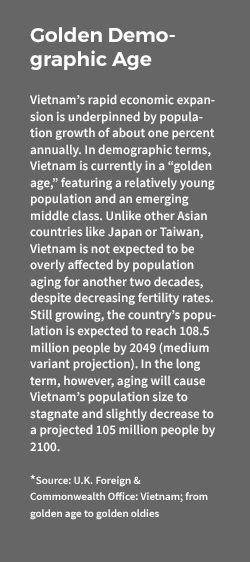 Equally in China, the success of this strategy has been remarkable: Over the past thirty years, Vietnam, a state of 92.7 million people (2016, Earth Banking company), has transformed from an impoverished, war-ravaged country to a newly industrialized "tiger cub" with one of the most dynamic economies in the globe. Between 1990 and 2016, Vietnam'due south Gross domestic product grew by a whopping 3,303 percent, the 2d-fastest growth rate worldwide, only surpassed by China.
The land's continued economic rise is not guaranteed and remains dependent on a multifariousness of factors, including sustained levels of foreign direct investments, political stability, infrastructure development, and the modernization of a stifling regulatory system plagued by corruption.
Crucially, Vietnam needs to upskill its labor force, which is rapidly shifting with approximately ane 1000000 agronomical workers transitioning into industry and services each year. Expanding access to education and vocational preparation are paramount objectives of the government. The number of students in higher educational activity grew from effectually 133,000 students in 1987 to 2.12 meg students by 2015. Despite its meteoric economic growth, Vietnam remains a relatively poor country with a per capita Gross domestic product of USD $2,186 – less than half of that of Thailand's Gdp, for example (2016, World Banking concern).
However, the economic outlook for Vietnam looks bright. The professional services firm Pricewaterhouse Coopers, for instance, recently forecast that Vietnam to continue to grow at a rapid pace over the coming decades, and get the world'south 20th largest economy by 2050.
Nominally still a Socialist Republic under Communist one-party dominion, Vietnam is expected by many to eventually follow the development trajectory of Asia's "tiger economies" (South Korea, Singapore, Taiwan and Hong Kong).
Didactics Reforms
Ane of Vietnam's strategies to achieve farther economic growth is the modernization of its pedagogy system, which is considered to exist lagging behind other Southeast Asian countries past outside observers. Instruction features prominently in Vietnam's current "socio-economic evolution strategy for 2011-2020", which seeks to accelerate human being majuscule development, boost enrollments in higher teaching, and modernize education to meet the needs of the country's industrialization in a global surround. The goals of several of the current education reforms were already laid down in a government directive from 2005 on the "Comprehensive Reform of Higher Education in Vietnam, 2006–2020".
Among the bold reforms currently enacted are the establishment of new accreditation and quality assurance mechanisms, the creation of a national qualifications framework, and a desperate increase in higher education enrollments by 125 percent, from 200 students per 10,000 people in 2010 to 450 students per 10,000 people by 2020.
- Didactics quality volition be improved by requiring almost all college teaching instructors to agree masters or doctoral degrees past 2020.
- Labor strength development is beingness prioritized with large-scale investments in applied, employment-geared training.
- 70 to 80 percent of the student population should be enrolled in applied programs by 2020.
- The secondary pedagogy system is also undergoing major reforms, most notably with regards to loftier school graduation examinations and university admissions.
Another goal of the current reforms is the internationalization of Vietnam's all the same somewhat insular higher teaching system. The authorities is trying to expand English-language didactics in Vietnam, and promote transnational cooperation and substitution with countries similar Australia, French republic, the U.S., Japan, and Federal republic of germany. Vietnam has besides acceded to international educational activity agreements, such as the Asia-Pacific Convention on the Recognition of Qualifications in Higher Education. Study abroad of Vietnamese students and scholars is explicitly promoted, while the government simultaneously seeks to increment the number of strange students and researchers in Vietnam.
These fast-evolving developments have implications for international credential evaluation and student recruitment in Vietnam. To better sympathize these changes, this article describes current trends and developments in Vietnamese educational activity and pupil mobility and provides an overview of the Vietnamese education system.
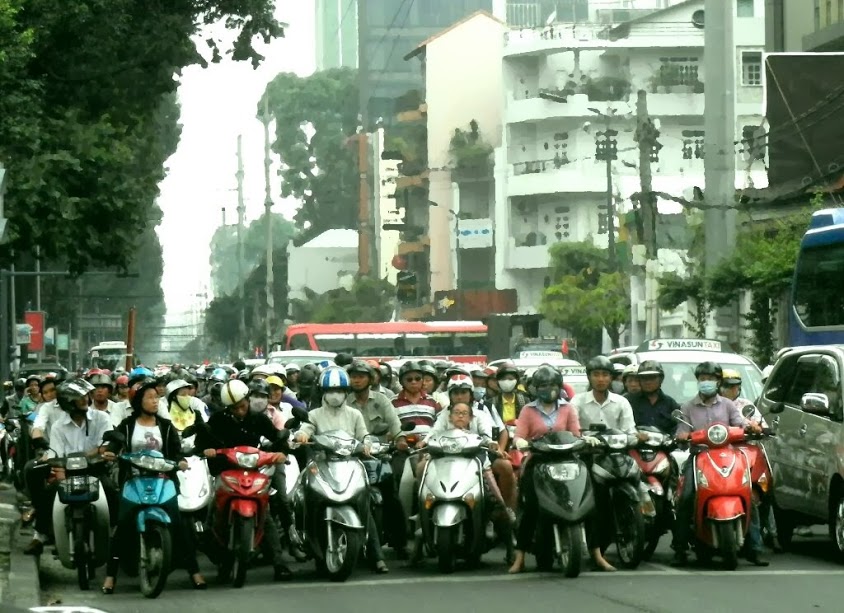
Commuters in Ho Chi Minh City
Outbound Student Mobility
Vietnam is currently ane of the almost dynamic outbound student markets worldwide, abaft mega sending countries like China and Republic of india only in sheer size. Between 1999 and 2016, the number of outbound Vietnamese degree students exploded past fully 680 percent, from 8,169 to 63,703 students (UNESCO Establish of Statistics). Outbound caste mobility in China, by comparing, grew past 549 percent during the same period, while the number of outbound Indian degree students increased past only 360 percent.
This drastic increase in Vietnamese mobility reflects the country'south swift economical growth, also as of the shortcomings of its pedagogy system. Mutual outbound mobility drivers, such as an emerging centre class able to beget study abroad and rapid massification of instruction coupled with express access to high-quality education, are prominent in the country. Vietnam has the fastest growing heart course in Southeast Asia, projected to abound to anywhere between 33 and 44 one thousand thousand people by 2020, depending on the estimate. Tertiary enrollments, meanwhile, tripled between 1999 and 2015. The number of youths seeking college instruction in Vietnam has increased significantly, swelling the ranks of potential mobile students. Given Vietnam's economic growth projections, educatee mobility is jump to increase in the years ahead, peculiarly as the country seeks to internationalize its economy and instruction organisation.
Access and Quality Concerns
Access limitations and quality problems in Vietnam are also factors facilitating outbound mobility. Despite a growing number of new higher teaching institutions, Vietnam'due south education system does non sufficiently absorb the burgeoning youth population of a land in which 37 percent of the population is below the age of 25. Vietnamese universities reportedly but had chapters for 1-tertiary of applicants in past years. Merely 6.vii percent of Vietnamese to a higher place the age of 25 held tertiary degree attainment in 2009, a considerably lower percentage than in other regional countries like Indonesia, Malaysia, Thailand, and the Philippines.
Over the past decades, the fast-paced growth of the education system has intensified quality problems at overcrowded universities and led to the mushrooming of depression-quality individual providers. Harvard researchers Vallely and Wilkinson in 2008 described the Vietnamese education system as being in a state of crisis, characterized by international isolation, a lack of loftier-quality universities, inadequate strange linguistic communication training, bureaucratic obstacles, and curricula that do not prepare students for entry into the labor strength. Co-ordinate to recent Vietnamese media reports, the majority of new university graduates are presently unable to observe work, ofttimes due to a lack of skills.
These shortcomings are probable to motivate aspiring Vietnamese students to seek education abroad. Another push factor is the country'south accelerating demand for English language didactics, which is, as of at present, not sufficiently addressed past the overburdened Vietnamese organisation, even though the authorities in 2016 directed public universities to innovate English equally a 2d language of education.
The government, now more keen to promote internationalization, recently expanded a number of scholarship programs. The then-called 911 project, launched in 2013, for example, is slated to fund report away of x,000 Ph.D. candidates until 2020 with upward to USD $fifteen,000 annually per student. Despite these increases in funding, however, the vast majority of Vietnamese outbound students were, as of recently, however self-funded. While scholarships awarded by the Vietnamese Ministry of Education were, as of 2016, predominantly given to students going to Russia, cocky-funded students prefer Western destinations. More threescore percent of Vietnamese mobile degree-seeking students currently opt to report in English-speaking Western countries, according to the data provided by the UNESCO Found of Statistics.
Study Destinations
The U.S. has, over the past decade, become the most pop destination choice among Vietnamese students enrolled in degree programs away, despite the loftier costs of study in the U.Southward. and the legacy of the Vietnam War. Fully xxx percent of outbound Vietnamese degree students (19,336) studied in the U.Southward. in 2015 (UIS).1 The Open Doors data of the Institute of International Instruction, which includes both degree and non-degree seeking students, shows that enrollments of Vietnamese students surged by a remarkable 1,009 percent between 2000/01 and 2016/17, making Vietnam at nowadays the 6th largest sender of foreign students to the The states.
There are currently 22,438 Vietnamese students enrolled at U.Due south. institutions, predominantly at the undergraduate level. Many of them study at customs colleges, where Vietnamese found the 2d largest group of foreign students, bookkeeping for almost 10 percent of all international enrollments. Business majors are the preferred pick amid Vietnamese students (30 percent of enrollments).
Surveys point that Vietnamese students consider the U.South. a "scientifically avant-garde land" with an "excellent higher education system" and a "broad range of schools and programs," fifty-fifty though high costs remain a major business organisation for many students. Across that, student mobility to the U.S. also appears to be influenced by existing migrant networks – the largest numbers of Vietnamese students are enrolled at institutions in California and Texas, the two U.S. states with the highest concentration of Vietnamese immigrants.
The next virtually pop written report destinations among Vietnamese degree students include Australia (thirteen,147 students in 2015 as per the UIS), Nihon (6,071 students in 2014) and France (5,284 students in 2015). With the exception of French republic, where enrollments remained relatively flat, the number of Vietnamese degree students in these countries has increased strongly in recent years, if at smaller growth rates than in the United States. In Commonwealth of australia, the number of students increased by 75 percentage between 2009 and 2015, while in Nippon the number grew 110 percent between 2009 and 2014. Canada likewise experienced potent growth – the number of Vietnamese students jumped by 203 percent between 2005 and 2015, according to the Canadian government.
It should be noted that the Japanese regime reports vastly higher international pupil numbers (53,807 Vietnamese students in 2016) than the UIS and could, past some measures, exist considered the primary written report destination of Vietnamese students. Simply the Japanese statistics include a multifariousness of different student categories in non-caste programs, including students enrolled in language preparation institutes and academy-prep programs. The number of 3rd students is much smaller: 25,228 Vietnamese students studied at Japanese language training institutes, for instance.
Entering Mobility
Vietnam is currently non a major destination country for international students. To attract more than foreign students and researchers, the authorities has removed some obstacles, for instance, by allowing universities to fix their access standards for international students, instead of requiring Vietnamese-language entrance examinations. That said, Vietnam'south lack of top quality universities and few English-taught programs mean that Vietnam is not an obvious destination choice for international students beyond students studying Vietnamese civilization and language. The largest numbers of strange caste students in Vietnam presently come from neighboring Lao people's democratic republic (1,772 students) and Cambodia (318 students). (2016, UIS). Both countries have sizeable Vietnamese-speaking minorities.
Transnational Education (TNE)
TNE in Vietnam is growing, even though very few reputable strange institutions have established bodily branch campuses in the state so far. Commonwealth of australia's RMIT University is amid the few foreign-owned universities in Vietnam. Other foreign-backed universities include the Vietnamese-German language Academy, Vietnam-Japan Academy, and the Fulbright University Vietnam, a non-turn a profit university recently set up by Harvard University.
At the plan level, the number of government-approved TNE programs has increased significantly in recent years growing by 45 pct between 2010 and 2011 lonely, with universities from countries like France, the UK, and Australia beingness the principal partners in twinning agreements and transnational degree programs. Also of annotation is that the French accreditation agency HCERES in 2017 granted accreditation to iv Vietnamese public universities.
TNE in Vietnam continues to face some challenges, including quality problems, high taxation, lengthy approval processes and a difficult regulatory environment in which the Communist political party seeks to maintain control over foreign institutions, while simultaneously trying to attract more than foreign providers to Vietnam. In recent years, growing numbers of questionable foreign schools and diploma mills started to proliferate in the country.2 In response, the Vietnamese authorities in 2012 imposed restrictions on foreign institutions, such as a minimum initial investment volume of USD $15 million for college education institutions, minimum tuition fees of USD $7,500 per annum, and enrollment caps that limited the number of Vietnamese students at foreign loftier schools to twenty pct of the student body.
In 2017, the government further tightened these restrictions and required foreign institutions to front a minimum investment of USD $45 million. Enrollment caps for simple and secondary providers, on the other hand, are currently slated to be removed – a development expected to lead to a pregnant increase in the number of international high schools in Vietnam, especially since demand for foreign-language schooling is booming.
In Brief: Vietnam's Education System
Administration of the Education Arrangement
Until the 1980s, Vietnam'due south education arrangement was modeled later the system of the Soviet Union. Economic liberalization policies enacted after the 1986 Đổi mới reforms have since led to far-reaching changes in various sectors, including the education system, just the country remains under the firm control of the Communist Party of Vietnam (CPV). Many aspects of the educational activity system, thus, are highly centralized and directed by the Ministry building of Education and Training (MOET) in Hanoi.
The MOET is responsible for about aspects of schooling and the implementation of education policy. Until recently, the ministry building exercised far-reaching control over higher instruction institutions; a fact often cited as a hindrance for the modernization of education in Vietnam. The MOET stipulated rigid curricula and textbooks, admissions guidelines and staffing. Curricula, for example, continued to include mandatory Marxist-Leninist content, said to be of trivial practical relevance in the labor marketplace
However, the government has in recent years scaled back various regulations, and plans to increase the autonomy of higher education institutions (HEIs) "in terms of grooming, scientific research, organization, personnel, finance and international cooperation." The government has recently granted HEIs increased autonomy to determine their curricula and admissions quotas. Despite these changes, observers have noted that the arrangement and then far continues to be characterized by a loftier caste of bureaucratic centralization and a tendency to retain socialist curricula, fifty-fifty atVietnam's privileged National Universities, which technically already had greater autonomy than other institutions since their inception in 1993.
In improver to universities overseen past the MOET, a sizeable number of public institutions are under the purview of other government bodies, such as people's committees and different line ministries overseeing specialized institutions. Since 1998, large parts of vocational education and training are overseen by the Ministry of Labor, Invalids and Social Diplomacy (MOLISA).
Instruction Funding
Vietnam has ramped up instruction spending significantly in contempo years. Education expenditures as a percentage of Gross domestic product increased from 3.57 percent in 2000 to 5.xviii percent in 2006, and have since then remained above 5 percent, reaching five.vii percent in 2013. Education spending as a percent of the government budget has likewise been growing. Education is the largest expenditure detail on the state budget and stood at 20 percentage of full authorities expenditures in 2015 (USD $10 billion), a far higher percentage than the global average of fourteen.i percent (2013).
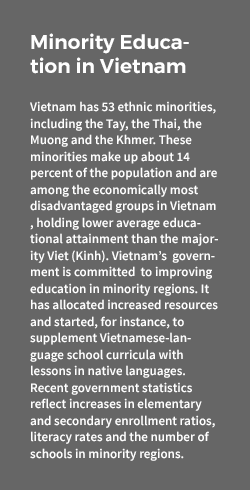 Increased funding withal, public schooling in nominally Socialist Vietnam is non entirely free and getting increasingly expensive. Even though unproblematic education is officially provided free of accuse and the authorities covers most costs, elementary schools accuse a variety of supplementary fees, ranging from maintenance levies to fees for the acquisition of books and uniforms. Secondary public schools, meanwhile, are allowed to accuse modest tuition fees. In improver, it is not uncommon for parents to pay school teachers for extra private lessons to ensure the bookish success of their children – an often corrupt practice that increases costs and inequalities in public education.
In college instruction, tuition fees averaged between USD $262 and USD $385 annually in 2015/sixteen, simply are jump to increase. Several public universities have already been exempted from caps on tuition. Height universities like the Ho Chi Minh City Academy of Technology are currently charging almanac tuition fees of USD $ 1,000 for bachelor's programs.
To ease the financial burden on the land and modernize the education system, the government also seeks to advance the privatization of teaching, an objective that could further drive upwards costs for students. The goal is to increase the share of individual funding sources at public universities and ensure that up to 40 percent of the pupil population will be enrolled at private institutions by 2020.
Enrollments and Progress in Elementary and Secondary Pedagogy
Co-ordinate to the Full general Statistics Office of Vietnam, most vii.viii million elementary pupils, 5.14 1000000 lower-secondary students, and two.4 million upper-secondary students were enrolled at fifteen,254 unproblematic schools, 10,321 lower-secondary schools, 2,399 upper-secondary schools, and 986 mixed schools throughout Vietnam in 2015/16.
Increased funding for instruction and other reform measures have led to tremendous improvements in enrollment rates and educational quality. At the simple level, for example, groovy progress has been made in closing gaps between urban centers and rural regions – the net elementary intake rate in rural regions like the Fundamental Highlands and the Mekong Delta increased from 58 and 80 percent in 2000/01 to 99 and 94 percent in 2012/2013. Repetition and driblet-out rates fell significantly throughout the land.
The net intake rate for lower-secondary education increased from 69.5 percent in 2000/01 to 92 percent in 2012/13 nationwide, despite lingering disparities between rural and urban regions at the secondary level. Other achievements include pregnant improvements in student-teacher ratios and an increase of youth literacy from 93 per centum in 2002 to 97 pct in 2012. The upper-secondary school graduation rate stood at 95 pct in 2015/16.
Underscoring contempo improvements in educational quality at the secondary level, Vietnam ranked 17th out of 65 countries, ahead of Western countries similar Australia, the U.S., or France, when for the first time it participated in the OECD PISA study in 2012. Some observers accept argued that the remarkably good results do non truly reverberate educational quality in Vietnam and may exist the event of the test's emphasis on mathematics and its standardized testing format. Others contend that Vietnam's success is based on smart curricular pattern and should serve as a model for lower-ranked ASEAN countries like Malaysia, Indonesia, and Thailand.
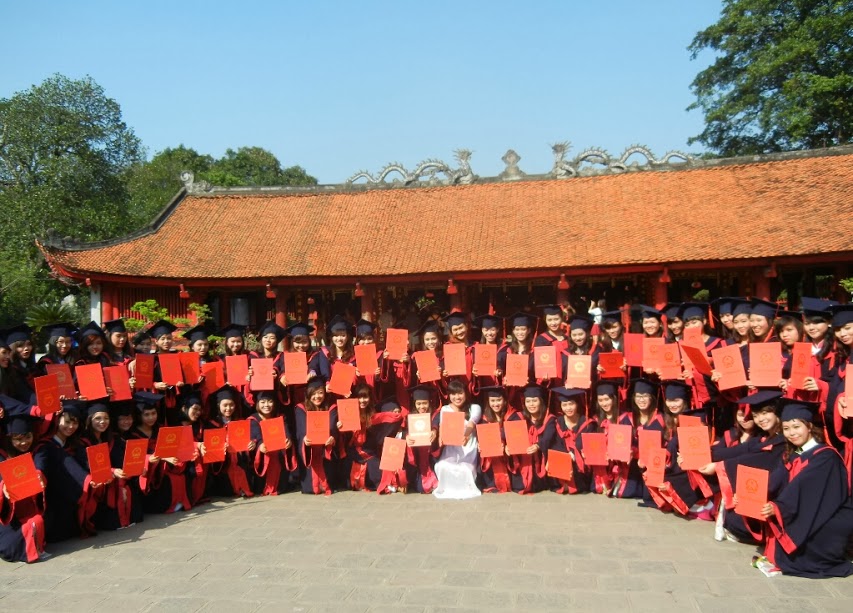
University Graduation Anniversary in Vietnam
Simple Education
Elementary education(tiểu học) in Vietnam begins at the age of six and lasts five years (grades one-5, until historic period 11). Subjects taught include Vietnamese, mathematics, moral didactics, natural and social sciences, arts, and concrete pedagogy, besides as history and geography in grades four and five. In 2017, the MOET announced that it would innovate foreign language and computer training starting in form three, and also offering minority languages equally an elective subject.
The curriculum emphasizes rote memorization and the linguistic communication of instruction is Vietnamese. Textbook learning increases in higher grades. Promotion is based on continuous assessment and year-end exams. A final exit exam used to be required until the 2000s but has since been abolished.
Until 2005, compulsory teaching in Vietnam ended with the completion of unproblematic education at the historic period of eleven (grade five) – an early age by international standards. Vietnam's education law of 2005 since stipulates universal and compulsory educational activity until grade 9, merely that objective has of yet not been achieved. Current reforms seek to universalize lower-secondary education by the end of the decade and implement compulsory didactics until historic period 15 (grade 9) throughout the country, showtime in 2020.
Lower Secondary Pedagogy
After completion of grade 5, pupils can keep their educational activity in a four-year lower-secondary teaching cycle (trung học cơ sở) or enroll in brusk-term vocational training programs.
Admission to general lower-secondary education is open up to all pupils who have completed elementary educational activity. Information technology lasts from form half dozen to grade nine and concludes with the accolade of a Lower Secondary Pedagogy Graduation Diploma (Bằng tốt nghiệp trung học cơ sở).
The curriculum includes Vietnamese, foreign linguistic communication, mathematics, natural sciences, civics, history, geography, applied science, computer science, arts, and physical didactics. A second foreign linguistic communication and minority languages are offered as elective subjects. Students attend upward to 30 45-minute classes per week, and annual promotion is based on instructor assessment and examinations. A last intermediate graduation exam used to be required for completing the program just is no longer in use since 2006.
General Upper-Secondary Education
Access to non-compulsory upper-secondary pedagogy is competitive and exam-based. The MOET has in recent years adopted various measures to streamline archway and graduation examinations, and the arrangement is currently undergoing frequent changes. Voluntary supplementary exams to gain "priority admission" at upper-secondary schools, for instance, were suspended in 2016.
Entry into public upper-secondary education nevertheless depends on rigorous entrance examinations. Contest is particularly trigger-happy for coveted spots at prestigious "high schools for the gifted," which only acknowledge the very best students. Other highly selective institutions include specialized high schools that offer programs focused on subjects like foreign languages.
Students who exercise not score high enough in the archway exams to exist admitted into upper secondary schools in the full general rails may seek admission to vocational upper-secondary programs (discussed beneath) or have to attend expensive private schools.
General secondary pedagogy encompasses grades 10 to 12 (ages 15-18) and concludes with the accolade of the Secondary Education Graduation Diploma (Bằng Tốt Nghiệp Phổ Thông Trung Học). Programs are usually offered in three different streams or subject groups (engineering, natural science, and social sciences and foreign languages).
All course requirements in specialization subjects used to be stipulated by the MOET and involved a full of vi hours per week in mathematics, physics, chemistry, and biological science in the natural science track; and literature, history, geography, and foreign languages in the social sciences and foreign linguistic communication track. Current reforms, appear in 2017, nevertheless, will permit for greater individual customization with elective concentration subjects now making upwards one-third of the curriculum. Beyond concentration subjects, all students take a core curriculum that includes subjects ranging from Vietnamese to strange language (mostly English), mathematics, and physical and armed forces teaching.
Upper-secondary students nourish upward to thirty 45-minute classes per week. Promotion is based on teacher assessment and year-end exams. Students who fail the annual examinations twice have to repeat the year. High school graduation requires passing a rigorous final secondary school graduation examination, which is likewise used to make up one's mind admission to higher pedagogy (meet section on academy admission below for more details).
Vocational Education and Grooming
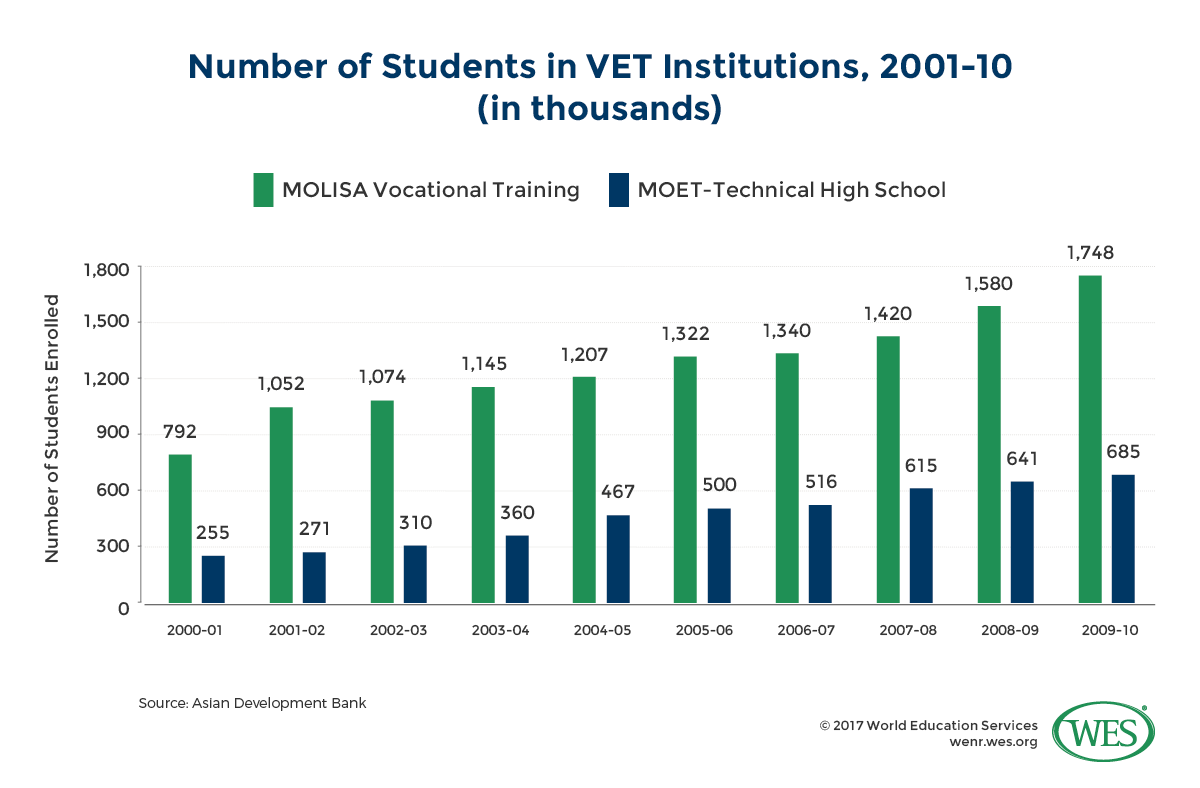
Several options for vocational education and training (VET) be in Vietnam. Both the MOET and MOLISA oversee a variety of VET programs, ranging from brusque-term standing education programs to formal training programs at both the secondary and post-secondary levels. Brusk-term vocational certificate programs (ngắn hạn) offered at vocational preparation centers are open to uncomplicated school graduates, whereas longer programs (up to three years) offered at vocational schools typically crave completion of at to the lowest degree lower-secondary pedagogy for admission. These longer programs lead to the award of a Vocational Training Diploma (Bằng Tốt nghiệp Nghề) – a credential that qualifies for employment in a number of trades.
Lower secondary graduates can besides enroll in more academically oriented vocational/technical high school programs, referred to as professional secondary or intermediate professional teaching, that combine vocational training with general education. These programs lead to the award of a Professional person Secondary Educational activity Graduation Diploma (Bằng Tốt nghiệp Trung học Chuyên nghiệp), concluding three to 4 years, and usually require passing an archway examination. Passing of the last national secondary school graduation examination upon completion of the program gives access to university education, but almost students in the vocational runway continue their studies at junior colleges. Students who already hold a general secondary education diploma can earn a professional secondary diploma in shortened one to two-year programs.3
At the post-secondary level, VET is typically provided at junior colleges (Cao đẳng), although college-level programs are besides increasingly offered by universities. Programs last between 2 and 3 and a one-half years and lead to the accolade of an Acquaintance caste (Cử nhân Cao đẳng ), or a Junior College Graduation Diploma (BBằng Tốt Nghiệp Cao Đẳng). Programs are geared towards employment and include a practical training component of upwardly to 30 percent. Fields of written report include business assistants, banking, accounting, tourism, it, or health care. Admission is based on the upper-secondary school graduation examination.
Vietnam'south Quest for Vocational Teaching and Training (VET)
Vietnam is in urgent need of skilled labor – a shortage that is fueled by the country's rapid economical growth and the increasing presence of foreign companies. Vietnam'southward labor force limerick has changed drastically in contempo years. Employment in the agronomical sector dropped from 69 percent in 1997 to 48 percent in 2011 with most 1 million workers transitioning from agriculture to industry and service sectors annually as of 2014 . The majority of the country's workforce, however, is before long lacking sufficient skills and technical expertise in a variety of fields, ranging from information and communications applied science to banking, bookkeeping, tourism or health care. Fully 83 percentage of Vietnam's labor force was still unskilled in 2012, and the country'due south labor productivity (an indicator of human upper-case letter development) was 37 percent of that of Thailand and 23.3 percent of that of Malaysia in 2010, according to the OECD .
Vietnam'southward government has, thus, fabricated man capital evolution a top priority and seeks to take hold of upwardly with other countries in the ASEAN community. It has allocated increased funds to VET and pushed the creation of new vocational training institutions, the number of which expanded to 165 vocational colleges, 301 vocational secondary schools, 874 vocational training centers and various other grooming programs under the supervision of MOLISA past 2014. The authorities has also sought assistance from countries and institutions like Commonwealth of australia, Deutschland, Korea, Nippon, the Eu and the Asian Development Bank in building a modernized VET system. Information technology intends to heave the percentage of workers that have undergone formal vocational training to 60 to 65 per centum of the workforce by 2020 while expanding enrollments in career-oriented report programs to 70 to 80 percent of all students in Vietnam.
Vietnam's quest for vocational training is also driven past increased demand for VET amid Vietnam's youth. Poor employment prospects for university graduates, in particular, have caused growing numbers of high school graduates to opt for vocational education instead of pursuing an academic career. As the online newspaper VietNamNet has noted, fifty-fifty academy graduates increasingly opt to put their "… bachelor's caste into a drawer and become dorsum to vocational school because industrial zones and factories but need skilled workers, not bachelor degree graduates". Between 2000/01 and 2009/10 alone, the number of students enrolled in vocational training schools and professional person secondary programs increased past 132 percent.
Admission to Higher Didactics
Progression from secondary to higher education in Vietnam is highly competitive and based on demanding examinations that place great force per unit area on students, like to the examination organisation in Communist china. Test periods have been dubbed "suicide season," due to increasing numbers of student suicides after the proclamation of university entrance examinations each summer. In 2012, simply 30 percentage of test takers passed the entrance exams, according to VietNamNet.
These examination pressures are one of several reasons that caused the Vietnamese authorities to enact many sweeping and ongoing reforms in university admissions. Until 2015, students offset sat for a secondary schoolhouse graduation examination in May/June, and a subsequent national university archway test in July (the and then-called "three commons" test). Since 2015, the academy entrance examination has been abolished and merged with the secondary graduation exam into a single national secondary school graduation exam (Kỳ thi trung học phổ thông quốc gia), now used to determine university admission. The change was intended to simplify the strenuous admissions process and lower the costs for universities, besides as students, many of whom were relying on expensive prep-schools to prepare for the university entrance exams. More students in rural regions can at present also take the test locally, instead of having to travel to Hanoi or Saigon to sit down for entrance examinations.
The structure and content of the new exam has undergone some changes since it was showtime announced. The most recent format (2017) of the "2-in-1" national graduation exam includes five test subjects: Three compulsory subjects (mathematics, Vietnamese linguistic communication, and foreign language) and two stream-specific combination subjects, which include natural sciences (physics, chemical science, biology) and social sciences (history, geography and civics). Students who intend to apply for university take exams in four subjects, but can besides cull to sit down for a fifth subject to increase options for admission. Students who practice not wish to move on to academy can opt to graduate with three test subjects.
The examinations take place in June or July, are administered past the provincial Departments of Instruction, and involve multiple choice and essay questions. The minimum passing score in each subject field is 5 out of 10. Universities typically base admission on the cumulative score in three subjects they consider relevant for the chosen major. The college the examination scores, the amend the chances of admission into commencement-option institutions (students can apply to multiple schools). The minimum threshold for university access set up by the MOET is a cumulative score of xv out of thirty in three subjects, but requirements vary by institution and are oftentimes much higher, with prestigious universities but accepting students with a score of 29 or college. Inferior Colleges normally have lower score requirements than universities (the official minimum threshold score is 12).
The government intends to lessen the importance of examinations and has announced that national graduation exams volition, in fact, be abolished birthday later on 2020, at which point admission will be based on overall student performance during senior high schoolhouse, rather than one last high stakes exam. The content of the final examinations volition be incorporated into the high school curriculum. Given the frequent changes in university admissions in contempo years, it remains to be seen, still, if and when these changes will be realized.
Information technology should also be noted that the MOET has given public universities the liberty to make up one's mind their admission requirements beyond graduation exam results. Some large and prestigious universities, including the Vietnam National Academy (Hanoi) or the Foreign Trade Academy, for example, at present utilize contained entrance examinations. Since average scores and pass rates in the national graduation exams held in 2017 were much college than in previous years, growing numbers of universities may start using their ain, more than selective admissions tests.
Higher Education Institutions
Types
The types of HEIs in Vietnam include junior colleges (trường cao đẳng – community colleges, instructor training and other specialized colleges), mono-specialized universities (đại học đơn ngành), multi-disciplinary universities (đại học đa ngành), and postgraduate inquiry institutes (học viện). According to Vietnam's 2005 Higher Instruction Law, HEIs are public, individual, or people-founded (tuition-funded institutions run by nongovernmental organizations similar trade unions, cooperatives or youth organizations). At that place are besides two public Open Universities (HCMC Open University and Hanoi Open University), which offer programs for students who scored besides low in the high school exams to be admitted to regular universities. Open up programs (mộ rồng) may also exist offered at other universities.
Largest Universities, Rankings, and Inquiry
The two biggest university systems in Vietnam are the Vietnam National University, HCMC and Vietnam National University, Hanoi – both public institutions with multiple mono-disciplinary member universities. VNU in Ho Chi Minh City (HCMC), the country's largest urban center, has a total enrollment of approximately 61,500 full-time students and offers at least 120 bachelor'due south programs, besides as a large diversity of primary's and doctoral programs. VNU-Hanoi is smaller with almost 34,000 students, according to the MOET. It reportedly has an acceptance rate of about xxx percent and charges tuition fees of USD $one,000 annually for bachelor's programs.
A recent non-governmental Vietnamese academy ranking alleged VNU Hanoi, Ton Duc Thang Academy and the Vietnam National University of Agronomics equally the best universities in the country, simply has been heavily criticized for its methodology. No Vietnamese universities are included among the world's summit one,000 in the well-nigh mutual world university rankings. The Vietnamese government is trying to change that and has selected three universities, the Vietnamese-German University, the Hanoi University of Scientific discipline and Technology, and the Vietnam-Japan Academy, to be developed into world-class research universities.
Academic Enquiry in Vietnam is nevertheless predominantly undertaken at research institutes (a legacy of the old Soviet-based system). Universities have since 1998 been allowed to offer postgraduate programs, but the academic research sector remains, as of now, relatively underdeveloped and underfunded past international comparison. The output of research publications past Vietnamese scholars, for instance, is far below the output of other regional countries like Thailand. Student enrollment in advanced study programs is still relatively small if growing briskly. While at that place were simply 30,683 primary'south students and ii,505 Ph.D. candidates nationwide in 2009, the latest statistics publicized past the MOET show that this number has jumped to 105,801 master's students (6 percent of all enrollments) and 15,112 doctoral students (0.85 percentage of enrollments) in 2017. In Thailand, past comparing, master's and doctoral students accounted for 8.5 percent and i.one of all enrollments in 2016. MOET officials in 2016 expressed concerns that this rapid growth has been achieved at the expense of quality and led to an "inflation" of inadequately trained Ph.D.s.
Rapid Growth and Staffing Problems
Vietnam'south university system has expanded dramatically over the past decades – from 101 public HEIs, zero private institutions, and 133,000 students in 1987 to 357 public universities and colleges, 88 individual HEIs and approximately 2.12 million students in 2015.
This swift massification has over the past decades resulted in overcrowded universities and inadequate teacher to student ratios, merely the situation has improved somewhat in recent years. In the public sector, growth in enrollments has recently slowed, and the number of students has, in fact, decreased from well-nigh ii million in 2014 to i.85 1000000 in 2015, likely due to a shift in enrollments towards the not-third VET sector. Between 2005 and 2014, faculty growth in the college education sector has likewise outpaced pupil enrollments –education staff at HEIs increased by 88 percent compared to a 70 percentage increment in students.
According to statistics published by the General Statistics Office of Vietnam, the student to teacher ratio in higher teaching has improved noticeably in recent years and stood at one to 22.seven in 2015. The official goal is to subtract this ratio to 1:20 by 2020. Between 2016 and 2017, the number of instructors at public HEIs increased by 4.vi percent. But information technology remains to be seen how the goal of decreasing student to teacher ratios can be aligned with the regime's simultaneous goal to more than double educatee enrollments from 2 percent of the population in 2010 to 4.5 percent of the population in 2020. Thus far, these enrollment goals remain a work in progress, despite rapid massification. Students accounted for roughly 2.six percent of the population in 2014.iv
Some other outcome is the quality of teaching in Vietnam. In 2009, less than half of teaching staff in higher education held graduate degrees. The situation has since improved. In 2012, 46 percent of instructors held main's caste, and 14 percent held doctoral degrees. However, Vietnamese universities are currently struggling to recruit qualified instructors, specially those holding Ph.D. degrees. The government plans to increase the number of instructors with master's and doctoral degrees to lx and 35 per centum of all teaching staff, respectively, by 2020. But the electric current shortage of teachers may irksome down the achievement of this goal. Lecturers in Vietnam tend to be poorly paid, and holders of doctoral degrees often have more than lucrative employment opportunities in other fields.
Individual Institutions
The showtime non-state HEI in Vietnam, Thang Long University in Hanoi, opened in 1988. Due to the sensitive political nature of privatization in Communist Vietnam, non-state HEIs were at first limited to people-founded and semi-public institutions (tuition-funded institutions nether state control). Private for-turn a profit HEIs were not allowed to operate until 2005. Since that change, the number of private institutions has expanded quickly and reached 88 private HEIs equally of 2015. Despite this growth, even so, total enrollments in the private sector stood at only almost 13 percent in 2015 (down from fifteen percent in 2010), according to regime statistics. This is significantly below the government's target of xl percent by 2020.
Many of Vietnam's private HEIs are turn a profit-driven "demand-absorbing institutions," that is, institutions that provide access to higher education, but not at the same level of academic quality or rigor offered past most public institutions. Individual institutions are often expensive and before long cannot effectively compete with the much more popular height-tier public universities. Many individual HEIs concentrate on niche fields and areas where public universities fail to meet growing need (business administration, strange languages and computer and it). In 2012, enrollment levels at private HEIs were and so critical that the Vietnam Private Universities Association issued a petition urging the prime government minister to permit private universities to lower their admission standards to recruit more students.
Bookish Corruption in Vietnam
Vietnam is a fairly decadent country past international standards. It was ranked the 33rd most corrupt country out of 176 countries included in Transparency International'southward (TI) 2016 Global Corruption Perceptions Index . Breakneck economical transformation, a lack of political accountability, red tape and a large-sized, poorly paid land bureaucracy are among the factors that facilitate corruption in Vietnam. The U.S. Bureau of Democracy, Man Rights and Labor noted in 2016 that abuse "connected to be a major problem" and that "nepotism and bribery in the public sector were prevalent throughout the country," while "most half (46 pct) of foreign companies cited corruption as their greatest challenge".
Education is considered the second virtually corrupt sector in Vietnam after the police. Blackmail to ensure academy admission or course improvements is mutual due to underpaid educators being susceptible to abuse. Fully 61 per centum of Vietnamese respondents surveyed by TI confirmed that parents pay bribes to teachers or school administrators. Some reported bribes were every bit loftier every bit USD $3,000 fifty-fifty for admission to desirable elementary schools.5
Other widely reported problems include plagiarism in higher education , the fraudulent conquering of academic degrees, manipulated budget estimates and the 'leakage' of funds from public procurement projects (didactics materials and construction of facilities, etc.).
These forms of corruption tend to erode educational quality and hold dorsum economic evolution. Rampant corruption is also political legitimacy problem for the CPV. The government has in recent years enacted various policy measures to combat corruption and fabricated some high contour arrests, at least 1 of which resulted in the expiry penalty . It remains to be seen, however, how effective these measures will exist in curbing the owned levels of corruption in Vietnam.
Quality Assurance: The New Accreditation Arrangement
1 of the reforms currently enacted in higher pedagogy is the implementation of new quality assurance mechanisms for HEIs. In 2004, the MOET initiated a new accreditation procedure based on institutional self-assessments and internal quality assurance mechanisms that are externally evaluated by accreditation agencies. Iv years after, a National Accreditation Council was established under the MOET. Past 2009, 110 Vietnamese universities had established internal quality assurance centers, and xx universities had received accreditation.
The procedure has since undergone various changes. At nowadays, accreditation is conducted by four accreditation centers under the guidance of the MOET'southward Full general Department of Education Testing and Accreditation (GDETA). They are the Center for Education Accreditation – VNU-Hanoi, the Center for Education Accreditation – VNU-HCMC, the Centre for Educational activity Accreditation – Da Nang University, and the Center for Education Accreditation of the Association of Vietnam Universities and Colleges. These iv agencies are tasked with accrediting HEIs, as well as vocational schools in the VET sector. Assessment criteria include a clear mission argument and adequate resources, staffing and curricula to realize this mission and prepare graduates for employment, as well every bit compliance with state regulations on international collaborations, and delivery to the socio-economical development of local communities and Vietnam. (For a sample of a self-assessment report, run across the study of Tan Tao University, submitted in 2016).
Accreditation is granted for v-year periods and is mandatory for all HEIs in Vietnam. Due to a lack of resources and staff, progress in accreditation, however, has thus far been sluggish, fifty-fifty though more than 90 pct of Vietnamese institutions accept established internal quality balls centers. In March 2017, the MOET promised that 35 percent of universities and ten percentage of junior colleges would be evaluated and accredited until the stop of the year. Program accreditation has too been introduced simply is all the same relatively uncommon every bit of 2017.
Other Reforms: New Credit Arrangement and Grading Scale
In that location have been several other changes in higher education over the by decade. In 2007, the MOET introduced a new U.S.-manner credit system at HEIs that gives students greater freedom to structure their curricula. Whereas students under the previous arrangement stayed together as a group and followed the same pre-fix curriculum throughout the programme, they since can choose more freely between credit-based courses. The new curricula include mandatory and elective courses worth 2 to 4 credits. Ane credit represents at least 50 minutes of in-classroom written report and 100 minutes of homework, taken over a 15-calendar week semester. 30 credits correspond one year of report at the undergraduate level. Most programs at Vietnamese universities are taken over two semesters per year (commonly from September to January and from February to June).
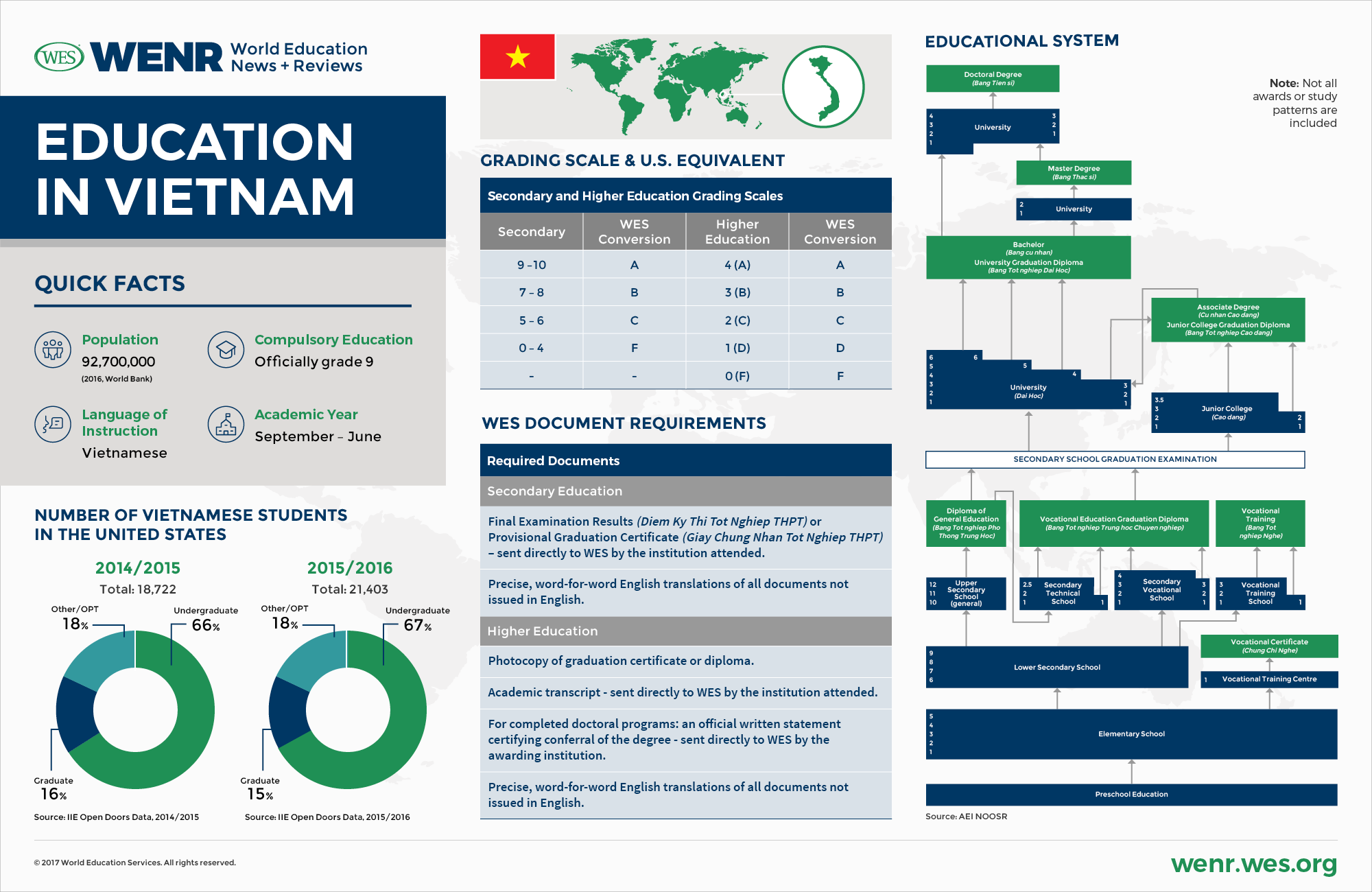
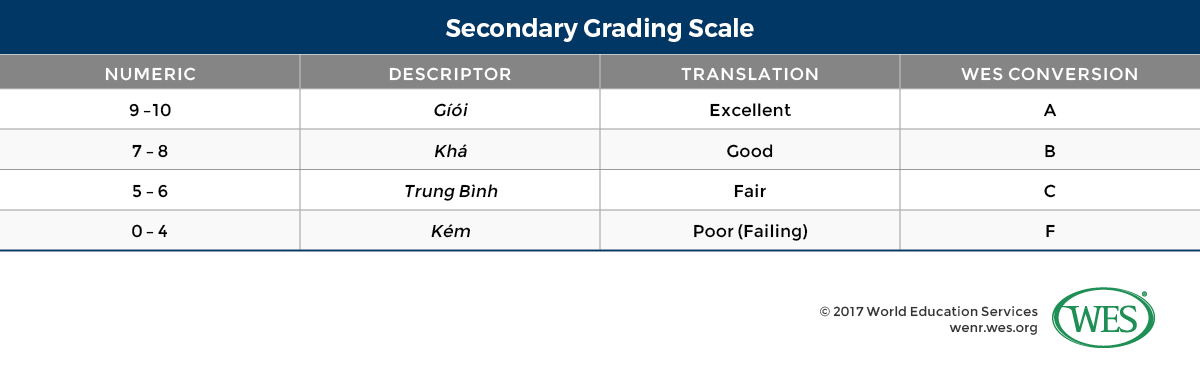
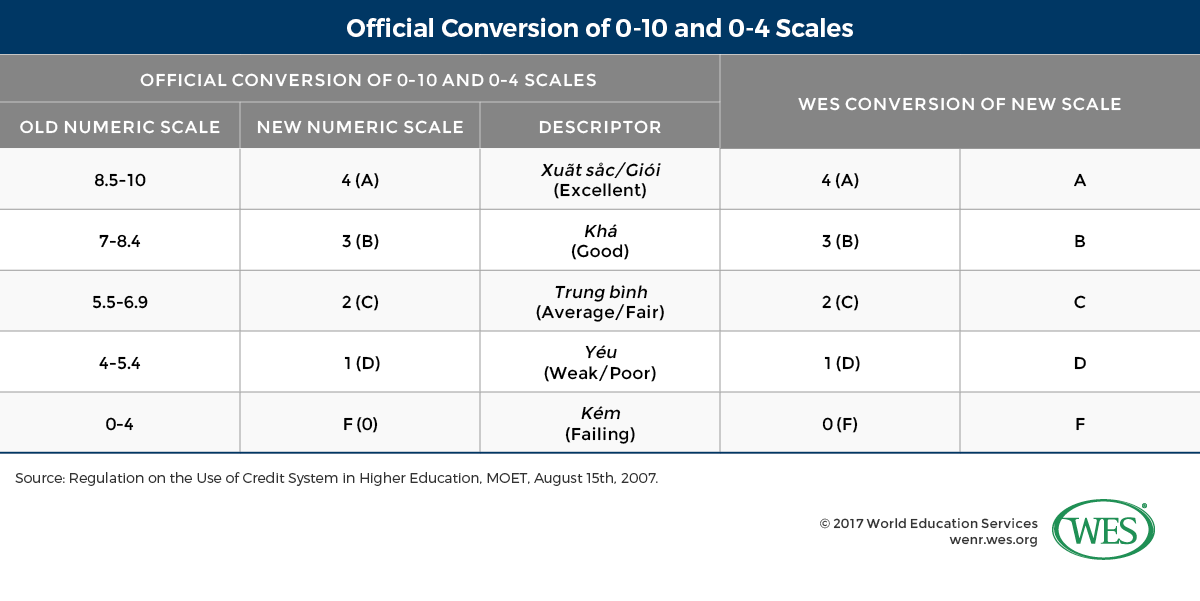
Together with the new credit organisation, the MOET mandated a new 4-bespeak grading scale to be used alongside the former 0-10 grading scale. While courses can however be graded according to the old 0-ten scale, scores now need also to be converted into the new scale, and the last cumulative average of degree programs must be expressed in the 0-4 calibration, respectively the corresponding letter grade. The official conversion between the two scales is listed below.
Vietnamese HEIs have since adopted dissimilar means of indicating grades on their transcripts. While some schools accept fully switched to the 1-four scale, many list course grades co-ordinate to both the 0-10 and the ane-4 scales on their documents. The last cumulative grade of the degree program is usually indicated in the new letter form (A, B, C) or the corresponding descriptor (excellent, practiced, average). Some universities accept likewise slightly adjusted the 1-four scale by using pluses and minuses (A+, A, A- etc.), similar to U.Due south. grading scales.
Evolution of a National Qualifications Framework
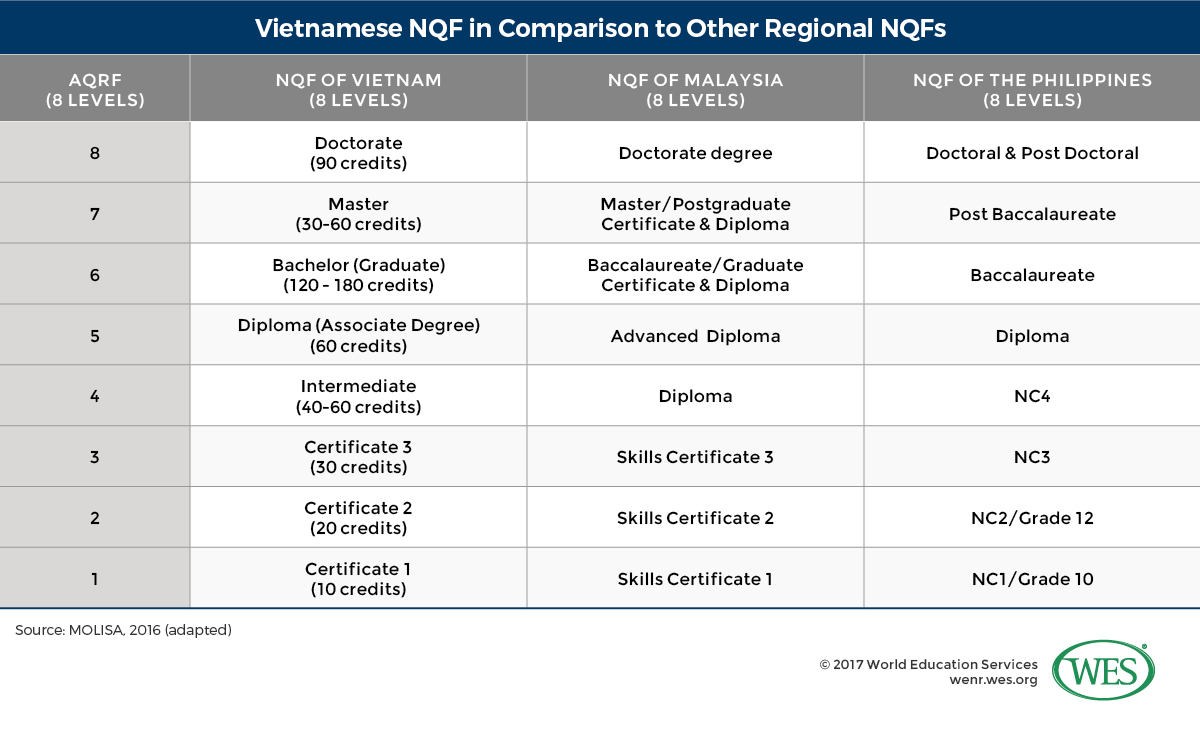
In November of 2016, Vietnam's Prime number Government minister approved the implementation of a National Qualification Framework (NQF) developed by the MOET and MOLISA. The 8-level framework is aligned with the Association of southeast asian nations Qualifications Reference Framework (AQRF) and intended to ease the international transferability of credentials. The framework also seeks to strengthen the quality of academic programs by defining learning outcomes and benchmark criteria for qualifications awarded at the unlike levels. Every bit a outset step towards implementation, these learning outcomes and benchmark criteria will now need to be divers. The British Council is presently assisting with the implementation of the framework. Another objective the government put forward alongside the NQF is the future shortening of university curricula. If implemented, these reforms could decrease the length of a standard bachelor's caste in Vietnam from four to iii years.
The Higher Education Degree System
At its cadre, the electric current degree system in Vietnam resembles the system of the United States. It includes an intermediate college degree, a iv-year standard bachelor's degree and a two-year primary's degree followed by a terminal research doctorate. All caste certificates from recognized Vietnamese universities must exist officially canonical and signed by the MOET.
Associate Caste (Cử Nhân Cao Đẳng) or Junior Higher Graduation Diploma (Bằng Tốt Nghiệp Cao Đẳng)
Programs are betwixt 2 and 3.5 years in length and are known equally "brusk-term training" in Vietnam. They are offered at junior colleges and some universities and require a minimum of 90 credits for iii-yr Curricula are typically applied and employment-geared in nature and include a practical training component. Graduates can be exempted from two years of study when transferring into available's programs at universities.
Bachelor's degree (Bằng Cử Nhân)
Bachelor programs are studied at universities and are typically four years in length in standard academic disciplines. Graduates receive a Academy Graduation Document (Bằng Tốt Nghiệp Đại Học) that indicates the specific degree awarded. Credit requirements vary slightly from institution to establishment but range from 120 to 140 credits. The terminal cumulative GPA must be 2.0 or higher for graduation. Curricula include a general education component in addition to specialized subjects. Programs may also include a thesis or internship and a graduation examination. Bachelor of Engineering (Bằng Kỹ Sư) programs are five years in length and require a minimum of 150 credits. Some available programs can exist studied in part-fourth dimension style.
Master's degree (Bằng Thạc sĩ)
Access into master'southward program requires a bachelor's degree and the passing of an entrance examination. Nearly programs are two years in length, simply some programs in disciplines like engineering science, for instance, may accept a elapsing of 3 years. Role-time programs also last three Standard programs ordinarily require between 40 and 45 credits for graduation and crave the completion of a thesis.
Dr. of Philosophy (tiến sĩ)
Admission to doctoral enquiry programs typically requires a master's degree and the passing of an entrance examination. Programs have a minimum duration of two years with most being 3 years in length, even though candidates may have longer to graduate. Available's caste students with exceptionally high grades may also exist admitted into doctoral programs, in which instance the program lasts at least 4 years and incorporates a main's degree. Completion of doctoral programs involves a set amount of coursework and preparation of a dissertation.
Professional Education and Grooming
First-caste programs in professions like medicine, dentistry, compages, or pharmacy are long single-tier university programs of five or half-dozen-year elapsing entered after high schoolhouse. Titles awarded include the bác sĩ (Medical Md), nha sĩ (Medico of Dental Medicine) and dược sĩ (Pharmacist).
Medical educational activity programs in Vietnam are six years in length and include a basic scientific discipline component of ii years followed past clinical theory and clinical practice in higher semesters. Admission at elevation universities is highly selective, but some second-tier universities admit students based on lower examinations scores. Shorter 4-year programs take recently been introduced for banana doctors with prior piece of work experience. These programs are intended to train community physicians.
Graduation from medical programs requires passing a concluding examination conducted by the university. Licensure as a general practitioner requires 18 months of practice at a hospital or comparable institution after graduation. In that location are no dissever licensing exams. Preparation in medical specialties lasts upwards to iv years, depending on the specialty. The most common artery for graduate medical education in Vietnam is a two-phase clinical grooming program offered by medical universities that leads to the laurels of a Specialist Certificate (Bằng Chuyên Khoa). Both stages (Specialist level 1 and Specialist level two) last two years each.
Teacher Education
The practice requirements for teachers in Vietnam depend on the level of education. Pre-school and elementary school teachers must have a professional secondary school diploma in teaching (Bằng Tốt nghiệp Trung học Sư phạm ), normally awarded by secondary teacher grooming schools. Lower-secondary school teachers commonly concur a teaching diploma from a pedagogical junior college (Cao đẳng Sư phạm ), whereas upper-secondary teachers must have a available'southward degree in education from a pedagogical university (trường đại học Sư phạm ). Holders of bachelor's degrees in other disciplines can obtain a teaching qualification by earning a supplementary i-semester teacher training document (Chứng Chỉ Sư Phạm ). In 2014 the MOET issued a directive that suspended this do, simply the ban seems to take been lifted, every bit universities are presently over again offering these programs. Like other parts of Vietnam'southward teaching system, teacher education is changing. The MOET seeks to strengthen teacher grooming while simultaneously trying to respond to teacher's shortages. In 2012, authorities estimated that the country lacked 27,500 pre-school teachers alone.
WES Document Requirements
Secondary Teaching
-
- Last Exam Results (Điểm Kỳ Thi Tốt Nghiệp THPT) or Conditional Graduation Certificate (Giấy Chứng Nhận Tốt Nghiệp THPT) – sent directly to WES past the establishment attended.
- Precise, give-and-take-for-word English translations of all documents non issued in English language.
College Instruction
-
- Photocopy of graduation certificate or diploma.
- Academic transcript – sent direct to WES past the institution attended.
- For completed doctoral programs: an official written argument certifying conferral of the degree – sent straight to WES by the application establishment.
- Precise, word-for-word English translations of all documents non issued in English.
Sample Documents
Click hither for a PDF file of the academic documents referred to below.
- Secondary Education Graduation Diploma (Bằng Tốt Nghiệp Phổ Thông Trung Học)
- Secondary Schoolhouse Graduation Examination
- Professional person Secondary Instruction Graduation Diploma (Bằng Tốt nghiệp Trung học Chuyên nghiệp)
- Inferior College Graduation Diploma (Bằng Tốt Nghiệp Cao Đẳng)
- Available (Bằng Cử Nhân)
- Degree of Doctor of Medicine (Bằng Tốt Nghiệp Bác Sĩ Y Khoa)
- Main (Bằng Thạc sĩ)
- Doctor of Philosophy (Bằng Tiến sĩ)
ane. When comparing international pupil numbers, information technology is important to notation that numbers provided by different agencies and governments vary due to differences in data capture methodology, definitions of 'international student,' and/or types of mobility captured (credit, degree, etc.) The data of the UNESCO Found Statistics provides the virtually reliable point of reference for comparison since information technology is compiled co-ordinate to i standard method. It should be pointed out, nevertheless, that it only includes students enrolled in third degree programs. It does not include students on shorter study away exchanges, or those enrolled at the secondary level or in short-term language training programs, for example.
2. Examples provided by Andrew Lawrence include unlicensed operators offering "… high-end degrees such as 'American MBAs'. Despite charging as much every bit USD $3,500, they attract many students, enticed by the prospects of obtaining a strange caste without having to know English… . An investigation by Thanh Nien News … , found two U.S.-based institutions, Southwest American University and Adam International University, were unaccredited in the U.Due south., withal offered x-month MBA programmes for USD $4,000 to Vietnamese students. English language skills were not required and omnipresence was low (Thanh Nien News 2010). Quoted Lawrence, Andrew: Grooming the Dragon: Transnational Higher Education in Vietnam, MA thesis, Simon Fraser University, 2011, p.62, http://bit.ly/2xbi1jz. Run across also: http://scrap.ly/2fFNVhT.
3. While most of these programs are offered at vocational schools, they may, on occasion, as well be offered by inferior colleges in the college didactics sector.
4. Calculation based on population statistics and HE student statistics provided by the General Statistics Office of Vietnam. Different other countries which measure enrollment ratios as the proportion of students among the relevant age group, Vietnam measures participation rates by the number of students enrolled per 10,000 people of the full population. Studies using a different method plant that Vietnam had a gross enrollment ratio (relevant historic period group) of 16 percent in 2007 – far lower than Thailand (43 percentage), Malaysia (32 percent) and China (twenty pct).
5. Stephanie Chow and Dao Thi Nga: Bribes for enrolment in desired schools in Vietnam, in: Transparency International, Global Abuse Report: Didactics, Oxford and New York, 2013, pp. 60 -67.
Source: https://wenr.wes.org/2017/11/education-in-vietnam#:~:text=Education%20is%20the%20largest%20expenditure,of%2014.1%20percent%20(2013).
Posted by: mcdanielhilen1975.blogspot.com
0 Response to "How Much Money Is Dedicated To The Education System In Vietnam"
Post a Comment